
ISO 42001 & AIMS Certification: Your Guide to Trustworthy AI Management
Navigate the future of artificial intelligence with confidence through the world’s first international standard for AI Management Systems. ISO 42001 certification empowers organizations to harness AI’s transformative potential while maintaining ethical integrity, operational excellence, and stakeholder trust.

Introduction and History: The Birth of the World’s First AI Management Standard
In December 2023, the international community achieved a landmark milestone in technology governance with the publication of ISO/IEC 42001—the world’s first comprehensive international standard dedicated exclusively to Artificial Intelligence Management Systems (AIMS). This groundbreaking framework emerged from years of collaborative effort involving hundreds of global experts spanning diverse disciplines including technology innovation, applied ethics, regulatory law, cybersecurity, and business strategy.
Global Collaboration
Developed by international experts in
technology, ethics, law, and business to create a unified approach to AI governance.
Addressing AI Challenges
Tackles critical issues including algorithmic bias, transparency requirements, data security, and organizational accountability
Seamless Integration
Designed to complement existing ISO
standards like ISO 27001 for information security and ISO 27701 for privacy management
The standard represents a proactive response to the rapidly evolving regulatory landscape surrounding artificial intelligence. As governments worldwide implement comprehensive AI legislation—most notably the European Union’s pioneering AI Act—organizations face mounting pressure to demonstrate responsible AI practices. ISO 42001 establishes a globally recognized benchmark that transcends regional requirements, providing a cohesive framework for responsible AI development, deployment, and ongoing management.
ISO 42001 bridges the gap between innovation and accountability, offering organizations a structured pathway to harness AI’s potential while safeguarding against its risks.
What distinguishes ISO 42001 from earlier governance attempts is its practical applicability across industries and organizational sizes. The standard acknowledges that AI systems present unique challenges distinct from traditional IT infrastructure—requiring specialized approaches to risk assessment, lifecycle management, and stakeholder impact evaluation. By establishing clear protocols for AI governance that integrate seamlessly with existing organizational processes, ISO 42001 enables companies to build trustworthy AI systems that drive competitive advantage while maintaining ethical standards and regulatory compliance.
Implementing ISO 42001: Key Requirements for Building Your AI Management System
Successfully implementing an AI Management System under ISO 42001 requires a comprehensive, organization-wide commitment that extends far beyond technical implementation. The standard establishes seven fundamental pillars that collectively form the foundation of responsible AI governance, each addressing critical dimensions of AI system management throughout their entire operational lifecycle.
Leadership Commitment
Top management must articulate clear AI policies, define measurable objectives, and ensure AI initiatives align strategically with organizational mission and values
Risk Management Framework
Implement systematic processes to identify, analyze, evaluate, and continuously monitor AI-specific risks including algorithmic bias, data privacy violations, and unintended consequences
AI Impact Assessment
Conduct thorough evaluations of potential societal, ethical, and technical impacts before deployment, considering effects on diverse stakeholder groups
Lifecycle Management
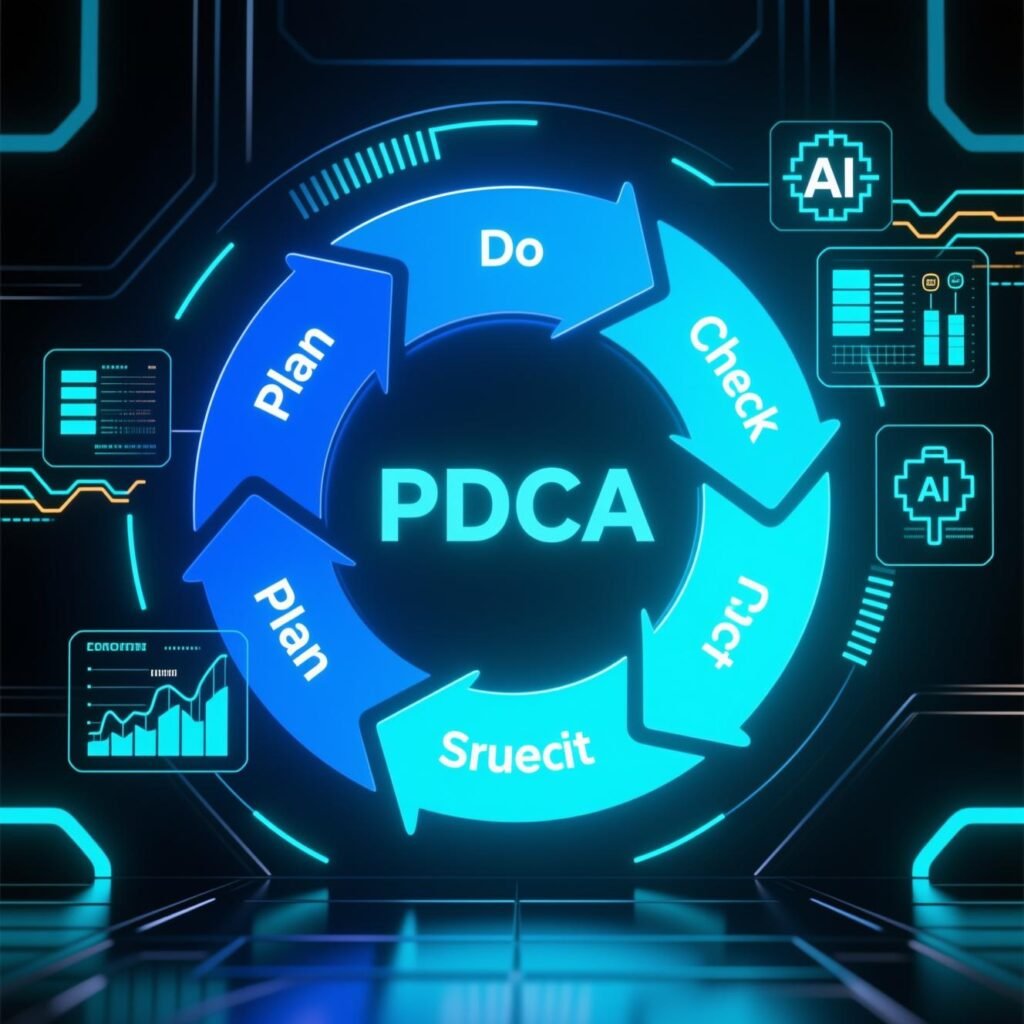
Apply the Plan-Do-Check-Act methodology across all phases: planning, development, testing, deployment, maintenance, and continuous improvement
Supplier Oversight
Establish rigorous due diligence processes ensuring third-party AI vendors and service providers adhere to your governance principles and ethical standards
Organizational Capacity
Invest in comprehensive training programs, awareness initiatives, and communication channels to build internal competence in AI governance principles
Performance Evaluation
Regularly monitor AI system effectiveness against defined metrics, implementing corrective actions when performance deviates from expectations
Organizational Capacity
Invest in comprehensive training programs, awareness initiatives, and communication channels to build internal competence in AI governance principles
The Plan-Do-Check-Act Cycle in AI Management
ISO 42001 embraces the proven PDCA methodology, adapted specifically for AI systems. Organizations begin by planning their AI objectives and identifying processes needed to deliver results. The “Do” phase involves implementing these plans and processes, while “Check” focuses on monitoring and measuring outcomes against policies and objectives. Finally, “Act” requires taking corrective actions to continually improve AI system performance and governance effectiveness.
This cyclical approach ensures AI systems remain aligned with organizational objectives even as technology evolves, business needs shift, and regulatory requirements expand. Regular iteration through the PDCA cycle creates a culture of continuous improvement that’s essential for maintaining robust AI governance over time.
Implementation success hinges on recognizing that ISO 42001 is not merely a compliance checkbox but a transformative framework that reshapes how organizations conceptualize, develop, and deploy artificial intelligence. Companies must establish cross-functional teams that bridge technical expertise with ethical reasoning, legal understanding, and business acumen. Documentation requirements ensure transparency and auditability, while regular internal audits verify that policies translate into consistent operational practices. The standard’s flexibility allows organizations to scale their AIMS according to their AI maturity level, starting with foundational controls and progressively enhancing sophistication as AI capabilities expand.
Benefits and Investment Resources: Why ISO 42001 Certification Pays Off
Achieving ISO 42001 certification delivers substantial strategic advantages that extend far beyond regulatory compliance. Organizations that successfully implement AIMS position themselves at the forefront of the responsible AI movement, gaining competitive differentiation in markets increasingly sensitive to ethical technology practices. The certification serves as a powerful trust signal to customers, investors, regulators, and partners, demonstrating verifiable commitment to AI governance rather than mere aspirational statements.
Enhanced Trust & Reputation
Build stakeholder confidence by demonstrating transparent, accountable AI practices backed by independent third-party verification. Certification differentiates your organization in competitive markets where AI ethics increasingly influences purchasing decisions and partnership opportunities.
Accelerated Innovation
Governance frameworks don’t constrain innovation4they enable it. ISO 42001 provides the structured foundation necessary to experiment confidently with cutting-edge AI technologies while maintaining guardrails that protect against unintended consequences.
Superior Risk Mitigation
Proactively identify and address AI risks before they manifest as costly incidents. Structured risk management prevents algorithmic bias, reduces compliance failures, and minimizes reputational damage from AI-related controversies4potentially saving millions in remediation costs.
Regulatory Readiness
Future-proof your organization against evolving AI regulations worldwide. ISO 42001 alignment significantly simplifies compliance with region-specific requirements including the EU AI Act, reducing adaptation costs as regulatory landscapes continue developing.
Quantifiable Returns on Investment
While certification requires upfront investment in time, resources, and expertise, organizations consistently report substantial returns. Integration with existing management systems—particularly ISO 9001 (quality), ISO 27001 (information security), and ISO 27701 (privacy)—creates operational efficiencies by leveraging shared infrastructure, documentation, and audit processes. Companies report reduced incident response costs, faster time-to-market for AI products through streamlined approval processes, and improved resource allocation through systematic prioritization of AI initiatives.
Essential Resources for Your Journey
- Official Documentation: ISO/IEC 42001:2023 standard text and supporting guidance documents
- Professional Training: Accredited courses covering AIMS implementation, internal auditing, and lead auditor certification
- Expert Consultation: Specialized advisory services from experienced AI governance consultants
- Certification Bodies: Trusted registrars including Schulman Compliance, DNV, BSI, and others with proven AI expertise
- Industry Communities: Peer networks and forums for sharing implementation experiences and best practices.
The investment extends beyond monetary considerations to encompass cultural transformation. Organizations building mature AIMS develop institutional knowledge that becomes a lasting competitive asset. Teams trained in AI governance principles make better design decisions, anticipate stakeholder concerns proactively, and contribute to products that balance innovation with responsibility. This human capital development represents perhaps the most enduring benefit of ISO 42001 implementation—creating organizations genuinely equipped to lead in the age of artificial intelligence.
Beyond Certification: Sustaining Excellence
Certification marks a beginning rather than an endpoint. ISO 42001 requires ongoing commitment to continuous improvement, regular surveillance audits, and periodic recertification. Organizations must maintain their AIMS as AI technologies evolve, business contexts shift, and regulatory expectations advance. Successful organizations embed AI governance into their cultural DNA, ensuring responsible innovation becomes an institutional reflex rather than a compliance obligation.
Immediate Actions
- Download ISO 42001 standard
- Schedule leadership briefing
- Research certification bodies
- Identify internal champion.
30-Day Milestones
- Complete gap analysis
- Develop project plan
- Secure budget approval
- Engage consultants if needed
90-Day Targets
- Launch training programs
- Document core policies
- Establish governance structure
- Begin control implementation
Certification validates more than compliance—it confirms your organization’s leadership position in the responsible AI revolution, distinguishing you as a trusted innovator committed to ethical excellence.
The journey to ISO 42001 certification demands dedication, but the rewards—enhanced trust, reduced risk, accelerated innovation, and competitive advantage—far exceed the investment. Organizations that embrace AIMS position themselves not merely to meet today’s requirements but to shape tomorrow’s AI landscape. Your roadmap awaits. The question isn’t whether to pursue certification, but how quickly you’ll begin transforming AI governance from aspiration into organizational reality.